
Pomegranate stage by stage
Pomegranate is grown by bahar (season), and how the plant is fed and watered decides flowering, fruit set and fruit quality. Growers bring us flower drop, cracked fruit and weak plants.
Main growing areas: Maharashtra, Karnataka, Gujarat and Rajasthan.
Rest and pruning
Before the baharRest, pruning and feeding prepare the plant to flower.
Flowering
After the rest periodEven flowering gives an even crop. Stress causes flower drop.
Fruit growth
About 4 to 5 monthsSteady water avoids cracking; balanced nutrition builds size and colour.
Harvest
End of the baharFruit colour, size and shelf life reflect care through the season.
Common pomegranate problems
Problems farmers bring to us
- Flower and fruit drop
- Fruit cracking
- Small fruit, poor colour
- Weak plants
- Plants dying
What to check first
- Keep soil moisture steady during fruit growth; sudden watering after dryness cracks fruit.
- Prune and clean plants between bahars.
- Check roots and stems of weak plants.
- Test soil and water.
The Immunity formula for pomegranate
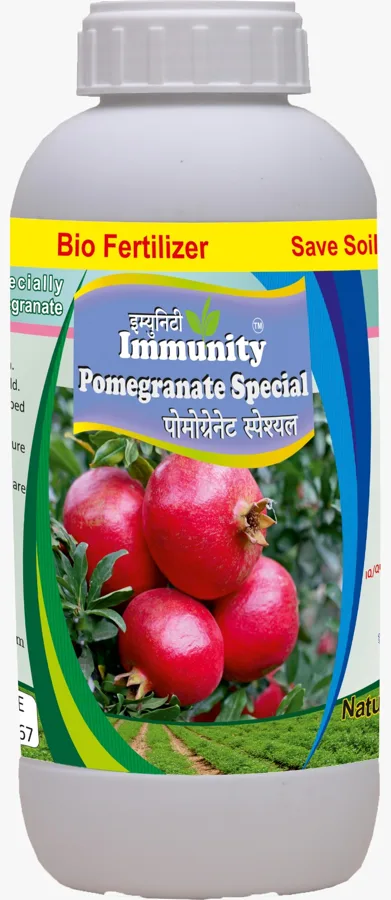
Immunity Pomegranate Special
Made for pomegranate: flower drop, fruit cracking and weak plants.
Packs: 250 mL, 500 mL, 1 L, 5 L
Results differ from farm to farm with soil, weather, crop and management. Farmer experiences on this site are their own reports, not a promise of results.
Pomegranate farmers in their own words
Pomegranate questions
Why does pomegranate fruit crack?
Cracking usually follows uneven watering: dry soil, then heavy water or rain. Boron and calcium shortage add to it.
Which Immunity product is for pomegranate?
Immunity Pomegranate Special.
Send us your enquiry
Tell us your crop, the problem and your location, and send a photo if you can. Our team replies on WhatsApp or calls you with what to check, which product suits and where to buy it near you.