
Paddy stage by stage
Paddy is grown in standing water, which changes how nutrients behave in the soil. Growers bring us weak tillering, yellowing after transplanting and chaffy, poorly filled grain.
Main growing areas: West Bengal, Uttar Pradesh, Punjab, Andhra Pradesh, Odisha, Tamil Nadu and Gujarat.
Nursery and transplanting
About the first monthHealthy seedlings and quick recovery after transplanting set the crop up.
Tillering
About 1 to 2 monthsThe number of tillers decides the number of panicles.
Panicle and flowering
About 2 to 3 monthsStress now reduces grains per panicle.
Grain filling
Last monthGrain weight builds up; leaf health matters most.
Common paddy problems
Problems farmers bring to us
- Weak tillering
- Yellowing after transplanting
- Zinc shortage (rusty brown spots)
- Chaffy, poorly filled grain
- Lodging
What to check first
- Transplant young, healthy seedlings.
- Watch for zinc shortage on alkaline soils.
- Keep water levels right for the stage.
- Count tillers per hill at mid-tillering.
The Immunity formula for paddy
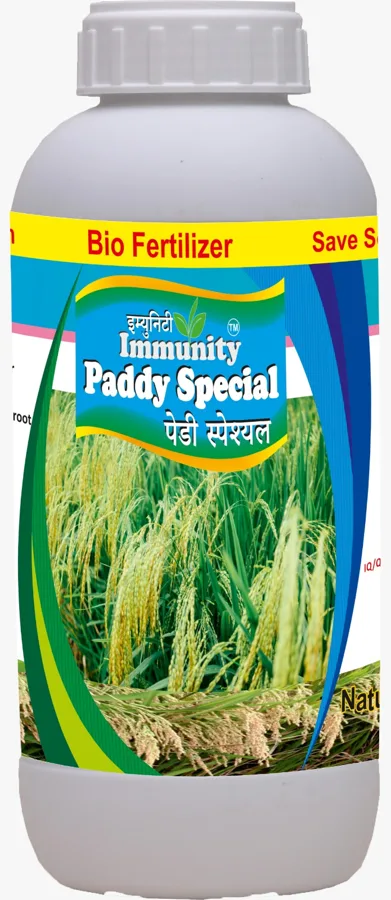
Immunity Paddy Special
Made for paddy: weak tillering, poor grain filling and yellowing.
Packs: 250 mL, 500 mL, 1 L, 5 L
Results differ from farm to farm with soil, weather, crop and management. Farmer experiences on this site are their own reports, not a promise of results.
Paddy farmers in their own words
Paddy questions
Why are my paddy leaves yellow after transplanting?
Transplanting shock, nitrogen or zinc shortage and poor roots are common causes.
Which Immunity product is for paddy?
Immunity Paddy Special. Immunity Azospirillum and ZSB biofertilizers also suit paddy.
Send us your enquiry
Tell us your crop, the problem and your location, and send a photo if you can. Our team replies on WhatsApp or calls you with what to check, which product suits and where to buy it near you.